Complementing Running and Badminton: How Pilates Prevents Injuries for Surabaya Athletes
The injuries that end running seasons and sideline badminton players are almost never sudden. They're the result of tightness and asymmetry building up over months. Pilates catches them early.
If you run the MERR corridor at dawn or play badminton three nights a week at a Surabaya club, your body carries the signature of your sport. That signature is what makes you good at it. It's also what will eventually injure you if it's not balanced.
Reformer Pilates as cross-training addresses the specific patterns that running and racket sports create — tight hip flexors, asymmetric shoulder mobility, weak glute medius, poor thoracic rotation. It doesn't replace your sport. It protects it.
Common patterns in runners
A regular runner develops several predictable imbalances:
- Tight hip flexors and quads from the repetitive knee-drive of the stride cycle.
- Weak glute medius, which controls hip stability laterally — its weakness causes knees to collapse inward on impact.
- Overworked calves and tight ankles from thousands of push-offs.
- Weak transverse abdominis and pelvic floor, which should stabilize the spine during every foot strike.
- Asymmetric strength — most runners have a dominant leg that gets slightly stronger while the other slightly weaker over time.
Any of these, unaddressed, become the origin story of a runner's knee, an IT band problem, plantar fasciitis, or an Achilles issue. All of them are common. All of them are preventable.
Common patterns in badminton players
Racket sports create asymmetry more aggressively than most sports. In badminton:
- The racket-side shoulder becomes more mobile and less stable; the opposite becomes stiffer.
- Repeated deep lunges tighten hip flexors, especially on the lead leg.
- Overhead smashes stress the shoulder in end-range positions, requiring exceptional stability.
- Sudden lateral changes of direction demand ankle stability and glute engagement that most players never train.
- Rotational spine work is one-directional, gradually reducing rotation to the non-dominant side.
What reformer Pilates addresses specifically
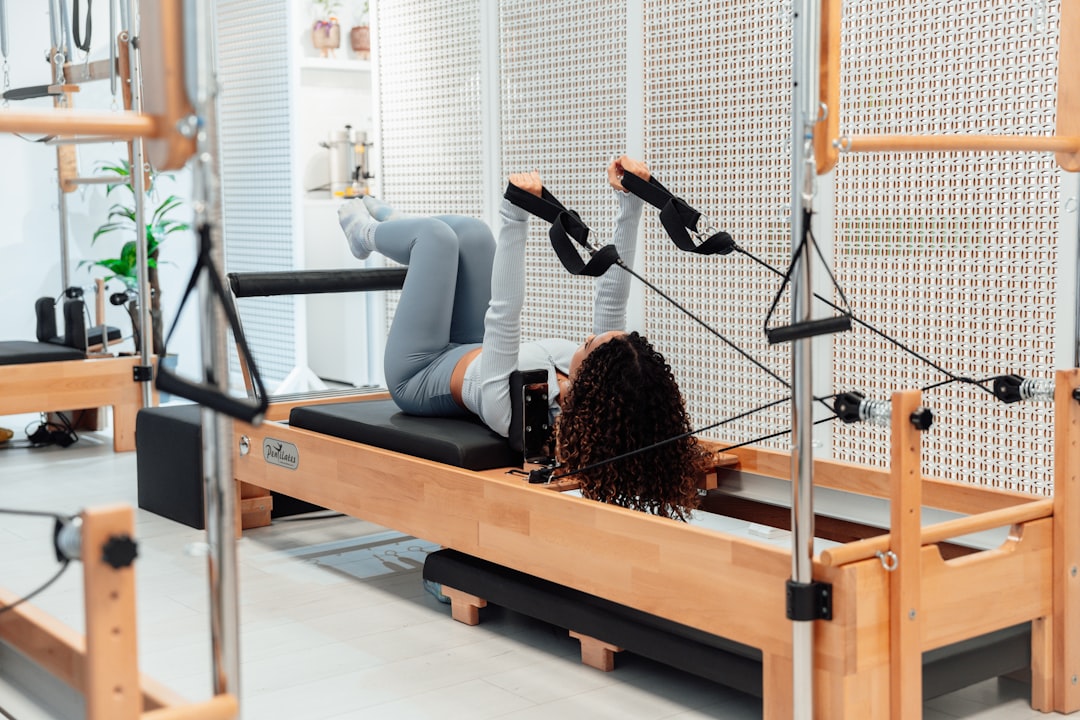
The reformer is uniquely suited to correct athletic asymmetries because it lets you train one side of the body against calibrated resistance while the other rests or works differently. This is much harder to achieve on a mat or in a weight room.
For runners, a twice-weekly reformer practice focuses on:
- Hip flexor lengthening under load — long stretch series, kneeling variations.
- Glute medius activation — single-leg carriage work, side-lying leg work.
- Ankle mobility with control — footwork on the platform through all foot positions.
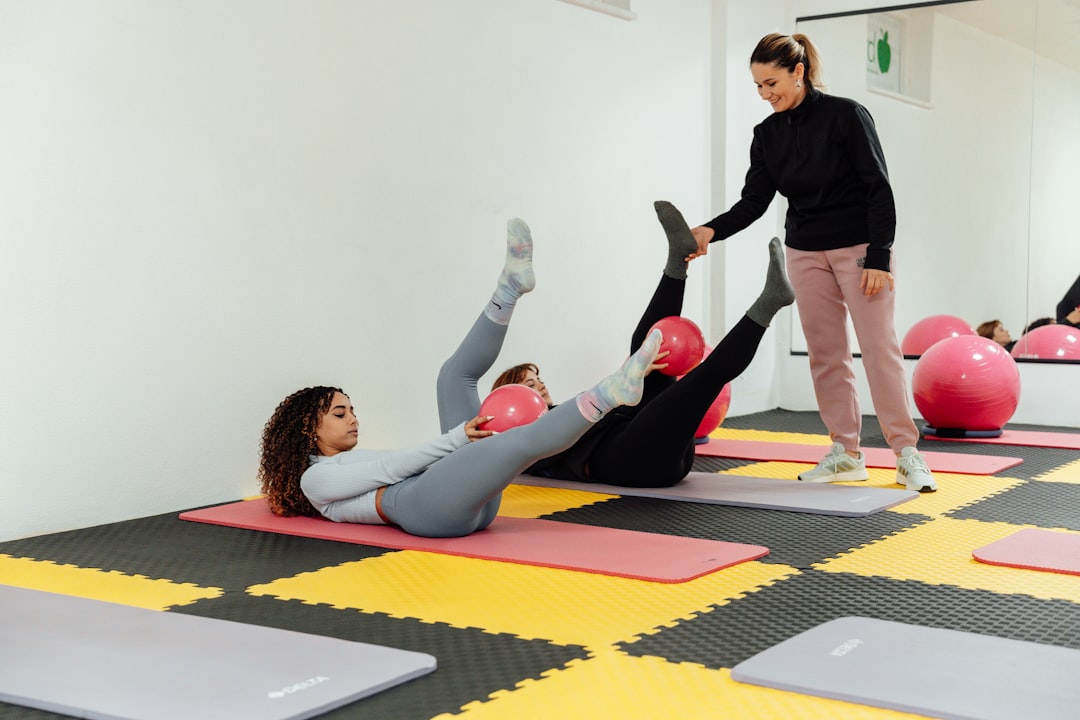
- Deep core engagement — pelvic curl, hundred variations, arm work with breath.
For badminton players, the focus adjusts:
- Bilateral shoulder work with straps — restoring symmetric mobility and stability.
- Thoracic rotation drills to both sides — reversing the one-directional bias.
- Deep lunge work with support — safely strengthening the position badminton demands.
- Ankle proprioception on the unstable carriage — teaching the ankle to respond to changes it can't predict.
A protocol for competitive athletes
Two reformer sessions per week, complementing your main sport, is the standard recommendation. Schedule one session earlier in the week and one toward the weekend, ideally on days you're not doing a hard training session in your sport.
Do not add reformer Pilates the week before a race or tournament — introduce it in an off-season or a lighter training block so your body has time to integrate.
What athletes notice
Within four to six weeks, most runners report reduced next-day soreness after long runs, and fewer of the small aches that used to accumulate in the calves and Achilles. Badminton players report a more even shoulder feeling, less lower-back tightness after long matches, and often — surprisingly — better shot control from the improved core stability.
The bigger benefit is invisible until it isn't: fewer weeks lost to injury over a season, a longer athletic career, and more capacity to push in the sessions that matter.