Reclaiming Posture in the Digital Age: Pilates for Tech Workers and Students in Mulyorejo and Sukolilo
If you spend eight hours a day looking at a laptop and another two on a phone, your body has adapted. The good news is it can adapt back — faster than you'd think.

Walk through any coworking space in Mulyorejo, or any lecture hall at UNAIR Kampus C or ITS, and you'll see the same posture. Head jutting forward, shoulders rounded, mid-back slumped, hips locked in a chair. This isn't laziness — it's what your body does when it spends most of its waking hours attached to a screen.
The clinical name is upper-crossed syndrome. Popularly it's called tech neck. Whatever you call it, it's the dominant posture of anyone whose work or study is done through a keyboard, and it produces a very predictable list of downstream problems.
What tech neck actually is
The average human head weighs about five kilograms. Held upright over the shoulders, the neck muscles hardly work. Tilted forward just fifteen degrees — the typical laptop-viewing angle — the effective weight on the neck rises to twelve kilograms. At forty-five degrees, which is what looking at a phone in your lap looks like, it's over twenty kilograms.
Your muscles adapt to this constant load. The muscles at the back of the neck stiffen up in permanent contraction. The muscles at the front of the chest shorten and tighten. The muscles between your shoulder blades — which should be pulling your shoulders back — go quiet from disuse. Your mid-back rounds forward to accommodate everything else.
The result: chronic tension at the base of the skull, tight upper trapezius, headaches, poor sleep, and — for many people — the beginnings of thoracic outlet syndrome or numbness in the hands.
Why reformer Pilates reverses it specifically
Most exercise doesn't target this pattern. Running, cycling, and swimming don't address the mid-back at all. Weight training often reinforces it — bench pressing and front-loaded lifts pull shoulders further forward.
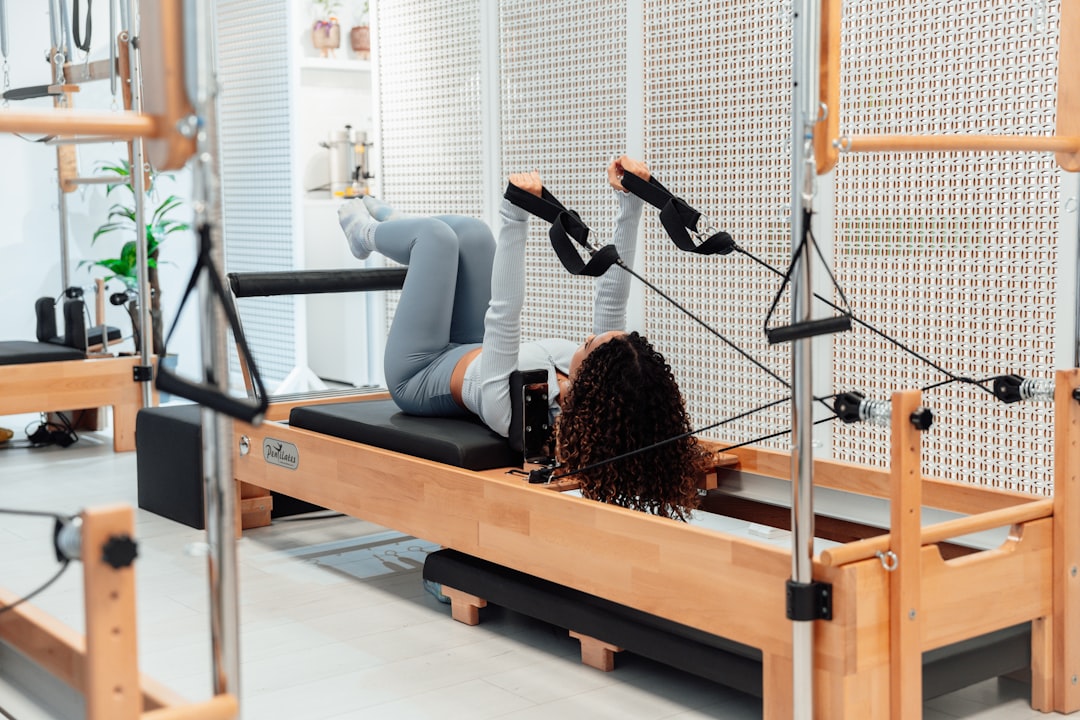
Reformer Pilates works because a large portion of the movements happen with your back against the carriage or in prone (face-down) positions that require you to actively pull your shoulder blades down and back. The exercises that target this are among the most valuable in the entire practice:
- Prone extension series — face down on the carriage, gently lifting into thoracic extension. Wakes up the mid-back muscles.
- Long stretch and up-stretch — plank variations that open the front of the chest and shoulders.
- Arm work with straps — precisely calibrated resistance for the rear shoulder and mid-back muscles.
- Roll-down and swan — spinal articulation that restores movement through the thoracic spine.
A realistic protocol for tech workers
Two sessions per week for six weeks is the minimum to notice change. Twice a week for three months is when the change starts to become permanent.
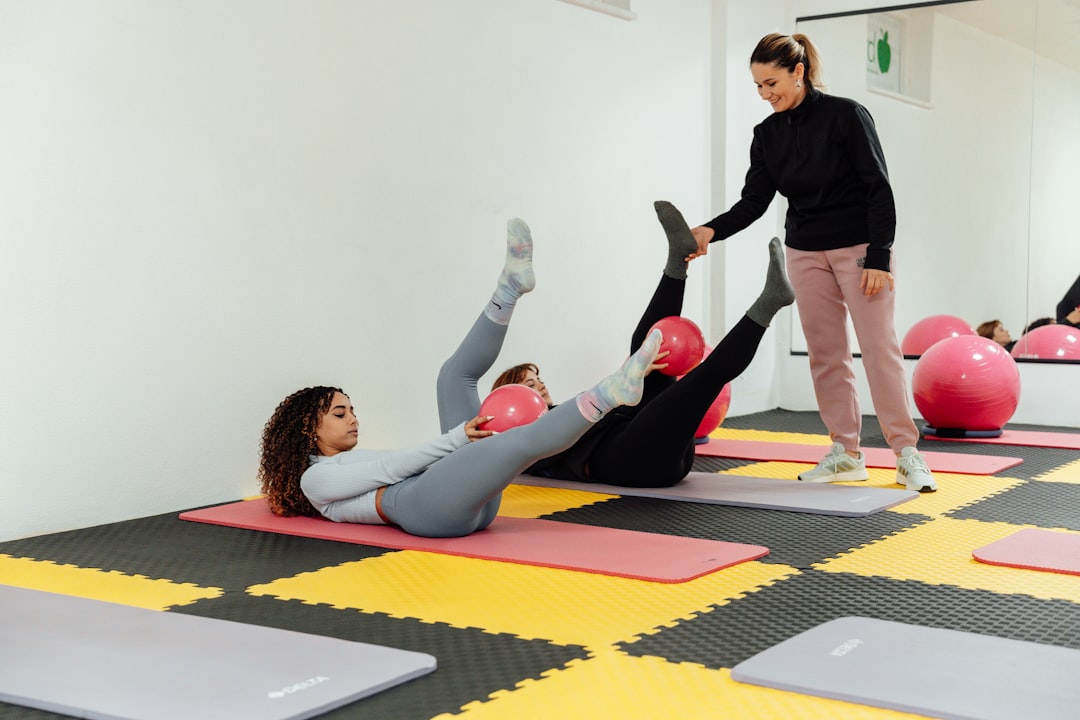
For students near ITS or UNAIR Kampus C, the studio is a 12-18 minute drive. That's short enough to fit around lab hours or thesis writing without breaking your day. For tech workers in Mulyorejo, Kertajaya, or the Surabaya East MERR corridor, evening classes after work are the natural fit.
What changes
The first thing most people notice, around week three or four, is that their eyes stop hurting at the end of the day. Not because their vision changed, but because their upper trapezius stopped pulling on the base of their skull. Headaches that were chronic become occasional. Sleep quality improves. Long coding or writing sessions feel physically easier.
Longer term, colleagues start asking if you did something with your hair, or lost weight. Neither is true. Your shoulders are just where they were supposed to be.